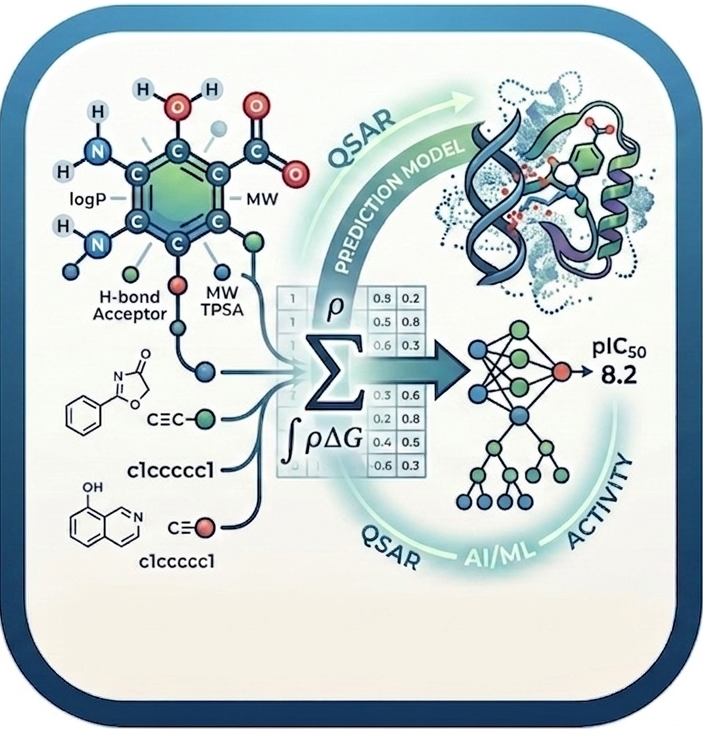
QSAR Modelling
Build robust Quantitative Structure–Activity Relationship models to predict biological activity, toxicity, and physicochemical properties of novel compounds.
- 2D/3D descriptor computation & feature selection
- ML/DL model development (RF, SVM, GNN)
- Model validation (cross-validation, AD analysis)
- Virtual screening & hit prioritisation
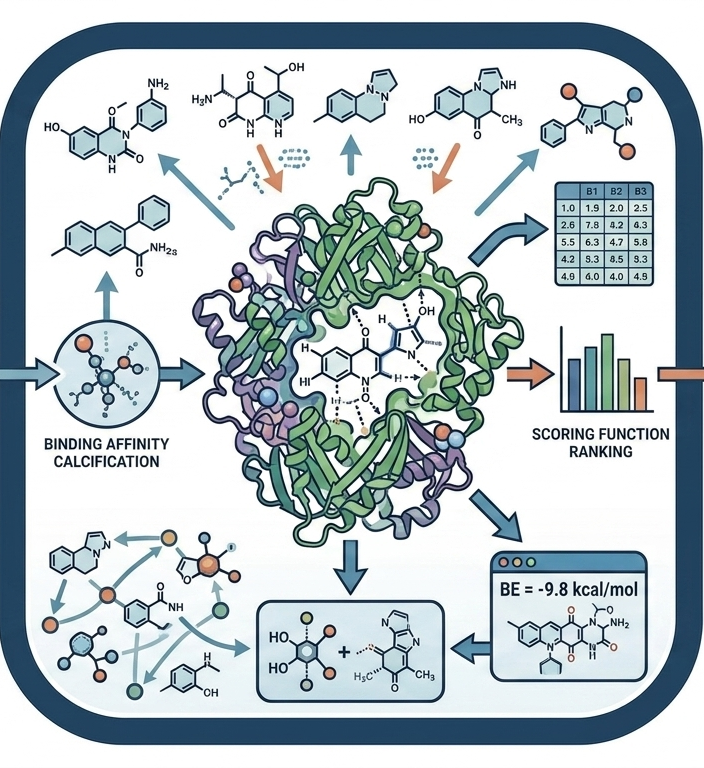
Molecular Docking
Accurately predict binding poses and affinities of small molecules, peptides, and fragments against protein and nucleic-acid targets.
- Rigid & induced-fit docking workflows
- High-throughput virtual screening
- Protein preparation & binding site prediction
- Detailed interaction analysis & visualisation
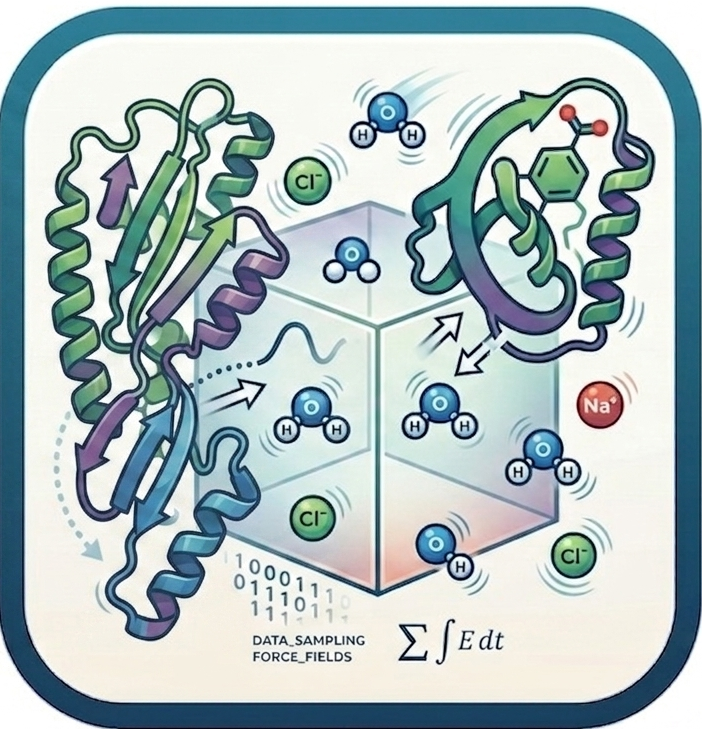
Molecular Dynamics
Simulate biomolecular systems over time to capture conformational dynamics, stability, and drug–target interaction mechanisms with atomic resolution.
- MD simulations (GROMACS, AMBER, NAMD)
- Enhanced sampling (metadynamics, REST2)
- MM-PBSA / MM-GBSA binding free energy
- Trajectory analysis, RMSD, PCA, DCCM
Genomics & Proteomics
Leverage large-scale genomic and proteomic data to uncover disease mechanisms, identify novel drug targets, and characterise protein function at a systems level.
- Whole-genome & transcriptome analysis (RNA-seq)
- Variant annotation & functional impact prediction
- Proteomics data analysis (LC-MS/MS)
- Protein structure prediction (AlphaFold, RoseTTAFold)
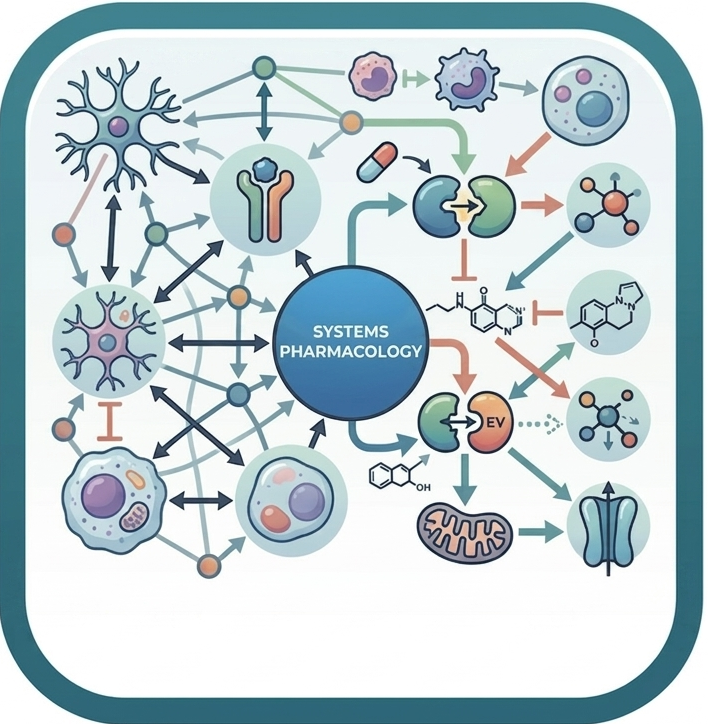
Systems Pharmacology
Integrate drug–target–disease networks with multi-omics data to understand polypharmacology, drug repurposing opportunities, and mechanism-of-action at a systems scale.
- Protein–protein & drug–target interaction networks
- Network topology & hub target identification
- Drug repurposing via network proximity
- Pathway enrichment & signalling crosstalk
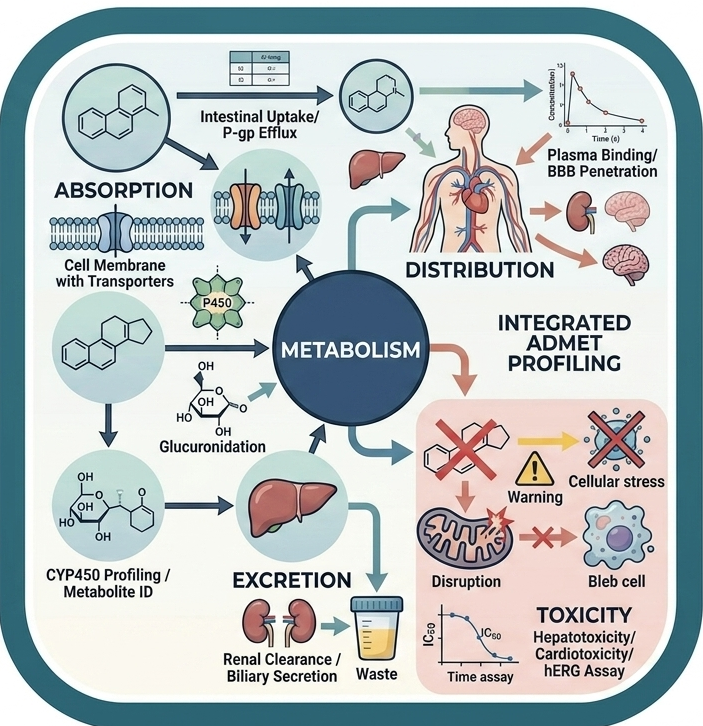
ADMET Analysis
Comprehensively profile the absorption, distribution, metabolism, excretion, and toxicity of drug candidates to guide lead optimisation and reduce late-stage attrition.
- Lipinski / Veber drug-likeness rule assessment
- BBB permeability, hERG & CYP interaction prediction
- In-silico toxicity (mutagenicity, hepatotoxicity)
- Bioavailability & metabolic stability modelling